


Introduction: Digital sovereignty in infrastructure
Digital sovereignty as the basis for resilient IT
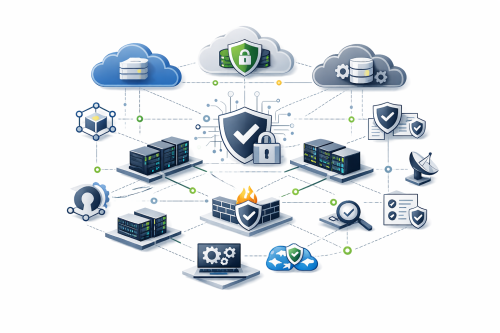
Digital sovereignty describes the ability of companies, public authorities, and organizations to control their digital systems, data, and dependencies in a self-determined manner.
It is not a purely political concept—in a corporate context, it primarily means:
- Control over data & access
- Freedom of choice in tools and platforms
- Minimizing dependencies on individual manufacturers
- Ability to flexibly switch or migrate technology
- Resilient IT that remains stable even in the event of disruptions, supply chain problems, or market changes
Digital sovereignty is therefore a key element of digital resilience.
Why digital resilience is becoming more important
Today, companies are more dependent than ever on stable IT supply chains. Minor disruptions—from supply bottlenecks and price increases to license changes—can generate massive follow-up costs.
Digital resilience means systematically reducing such risks.. These include:
- Alternative options for tools and infrastructure
- Multi-cloud strategies instead of dependence on a single provider
- Control over updates, repositories, and software sources
- Open automation instead of proprietary dependencies
- Transparent security and compliance processes
Digital resilience is therefore de-risking for IT.

Why vendor independence is becoming a strategic factor

Vendor dependencies often creep up on you: one tool becomes the standard solution—and suddenly every process, every script, and every security policy is tailored to that specific ecosystem.
Typical risks of vendor lock-ins:
- rising license costs
- limited automation options
- Dependence on product roadmaps
- little influence on patch cycles
- Manufacturer dependency in the event of security vulnerabilities
- Difficult migrations during strategic changes
An independent IT vendor structure and the use of open source solutions increase the ability to act—and thus the resilience of the entire company.
FAQ on digital sovereignty
What does digital sovereignty mean in a business context?
Digital sovereignty means that a company retains control over its IT systems, data, software sources and technological dependencies. This includes the ability to switch platforms, manage updates itself and rely on open source and vendor-independent solutions. The aim is not complete self-sufficiency, but the ability to act despite external dependencies.
What role does open source play in digital sovereignty?
Open source technologies promote digital sovereignty because their source code is openly accessible, they are based on open standards and are not tied to individual manufacturers. Companies can operate, test and adapt open source solutions themselves and integrate them into different environments. This reduces the risk of vendor lock-ins and long-term dependencies.
What is the difference between digital sovereignty and digital resilience?
Digital sovereignty describes the control and freedom of choice over one’s own IT, often supported by open source strategies and open standards. Digital resilience describes the ability to react to disruptions or changes without jeopardizing business operations. Sovereignty is therefore the structural basis, resilience the operational effect.
Why is vendor independence important for IT resilience?
Vendor independence reduces the risk of becoming incapacitated due to license changes, product discontinuations or strategic decisions by a single manufacturer. The use of open source software and open interfaces makes it easier to use alternatives and adapt or migrate systems as required.
What is vendor lock-in in IT infrastructure?
Vendor lock-in occurs when systems or automation are so strongly tied to one manufacturer that switching is only possible with a great deal of effort. Open source solutions and open APIs help to avoid such dependencies because they are interoperable and portable.
What role does IT infrastructure play in digital sovereignty?
Digital sovereignty begins at infrastructure level. Operating systems, patch management, repositories and automation determine how independent an IT environment is. Open source-based infrastructure and management solutions enable a particularly high level of transparency and flexibility here.
What does cross-platform management mean?
Cross-platform management refers to the centralized management of different operating systems and environments using standardized tools. Open source management platforms support the consistent management of Linux distributions, Windows systems and cloud and on-premise infrastructures without being tied to a single manufacturer ecosystem.
Why is lifecycle and patch management a sovereignty factor?
Controlled lifecycle management enables companies to set their own update times. Open source tools for patch and configuration management support automated, transparent and reproducible processes, independent of proprietary update mechanisms.
What does repository and content control mean?
Repository control means mirroring external software sources locally and releasing versions internally. This is particularly important for open source software, as it allows companies to determine which tested versions are used in their infrastructure.
What is meant by automation freedom?
Freedom of automation means being able to use and change automation tools independently of individual manufacturers. Open source automation tools such as Ansible, Puppet or Salt enable portable, auditable and cross-platform automation without proprietary dependencies.
Why are open standards and open source important for multi-cloud strategies?
Multi-cloud strategies only work sustainably if workloads and management processes are portable. Open source technologies and open interfaces prevent infrastructure from running exclusively in one cloud ecosystem.
What does flexible provisioning mean in open source-oriented IT?
Flexible deployment means that infrastructure management solutions can be operated anywhere, on-premise, in the private cloud or public cloud. Open source software facilitates this flexibility, as it is not tied to specific providers or license models.
How can companies check their digital sovereignty in concrete terms?
A sovereignty check includes analyzing vendor dependencies, evaluating the use of open source versus proprietary solutions, checking automation portability, controlling software repositories and assessing multi-cloud capability. The aim is to make technological dependencies visible and reduce them in a targeted manner.
Is digital sovereignty synonymous with open source only?
No. Digital sovereignty does not mean using open source exclusively. Rather, it is about a balanced architecture in which open source solutions and open standards help to reduce dependencies and maintain switching options.